

Victoria Saker Woeste

Historian of law who specializes in civil rights, religion, and economic change

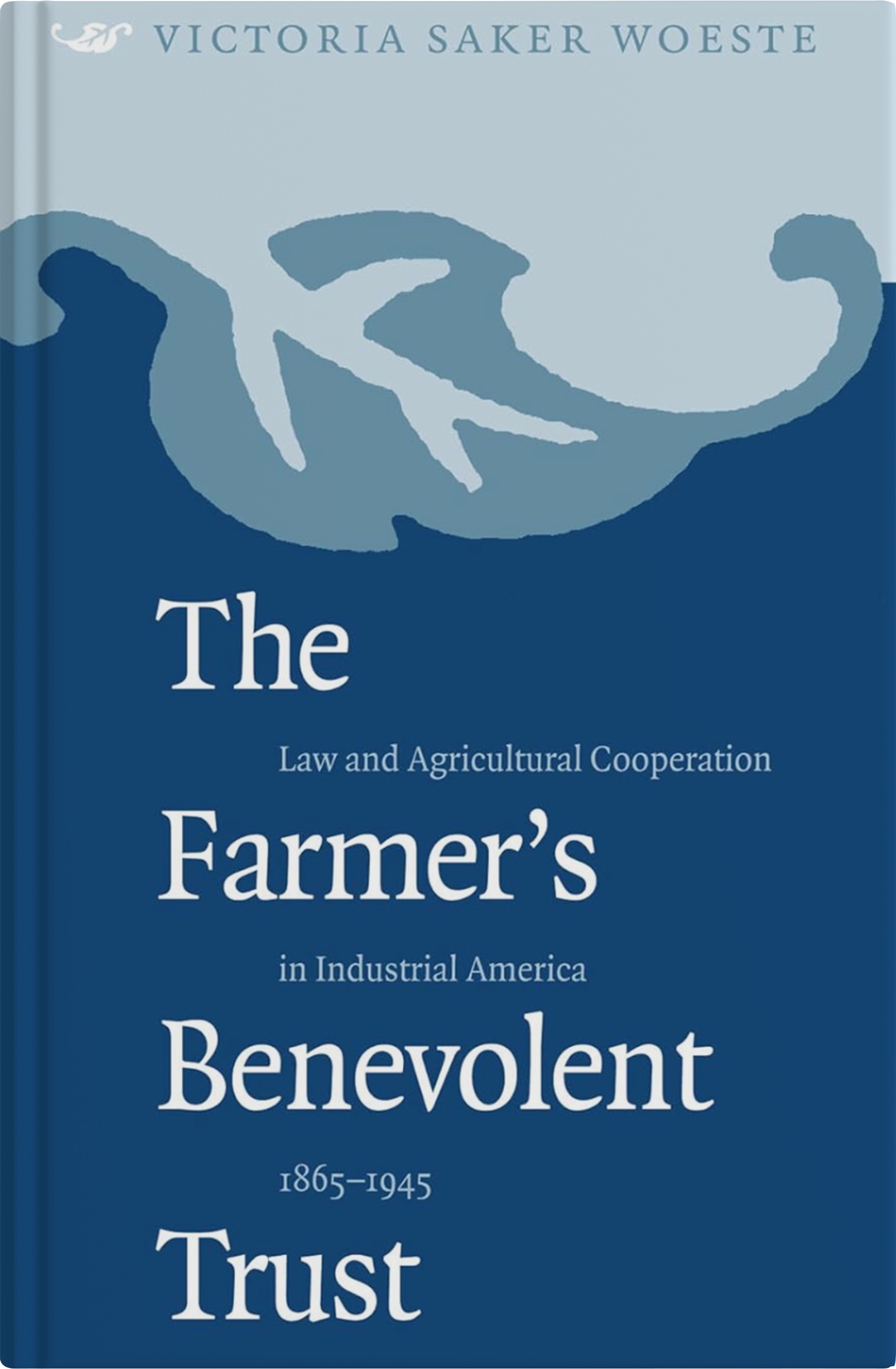
Vicky Woeste is a historian of law who specializes in civil rights, religion, and economic change. Her first book, The Farmer’s Benevolent Trust: Law and Agricultural Cooperation in Industrial America, published by the University of North Carolina Press in 1998, won the 2000 Hurst Prize for best book in legal history from the Law and Society Association and was named a Choice Outstanding Academic Book in 1999. Her articles have appeared in the Law and History Review, the Journal of American History, and Law and Social Inquiry. She has contributed to multiple edited volumes in legal and agricultural history and has also written essays for the Washington Post, History News Network, Legal Affairs, and Perspectives: The Newsmagazine of the American Historical Association. She has held fellowships from the National Endowment for the Humanities, Princeton University, the American Philosophical Association, and the American Jewish Archives.

Leviathan Productions Developing ‘Henry Ford’s War On Jews’ Book As Film

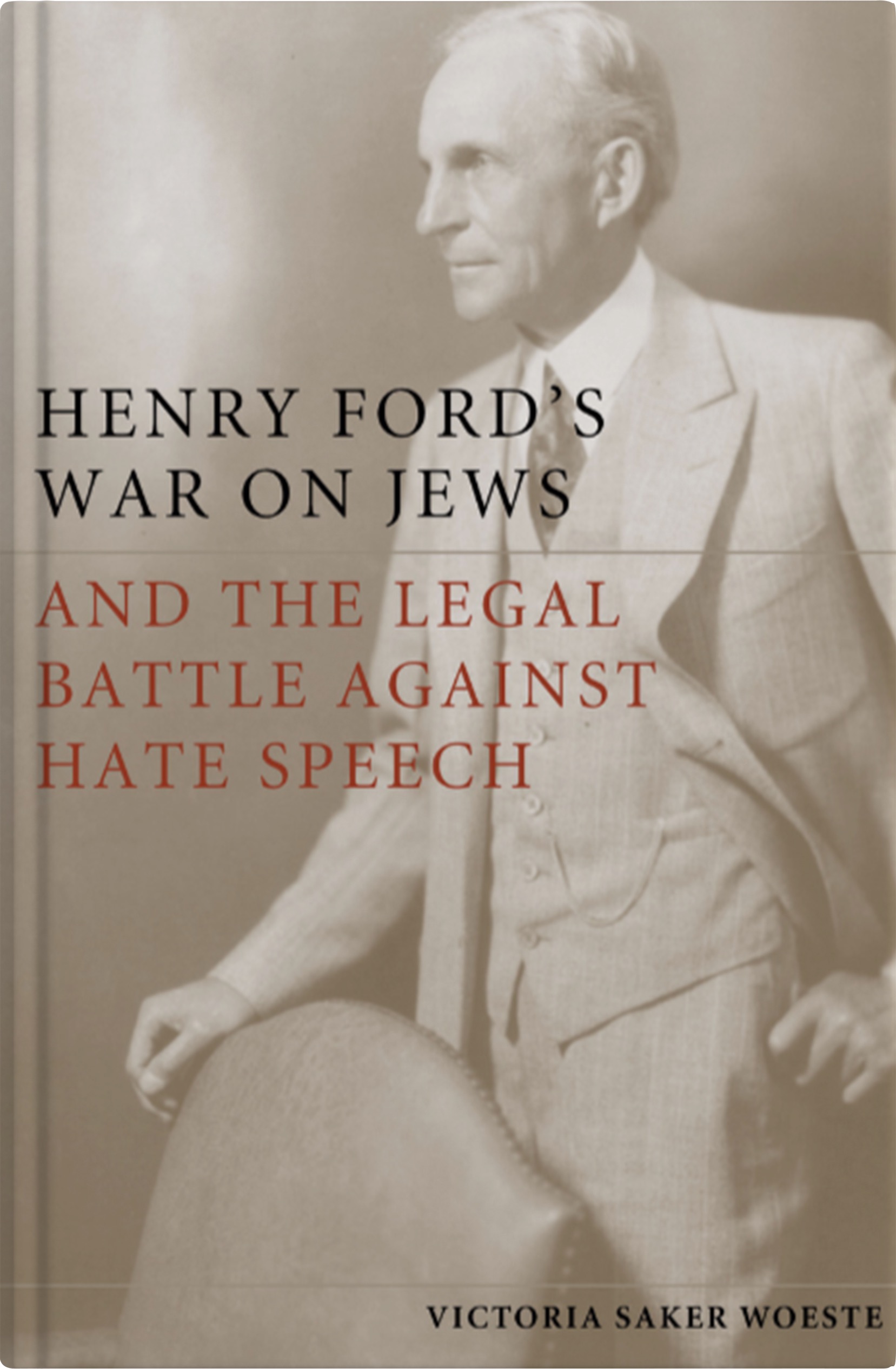
In November 2023, Leviathan Productions announced that it has optioned Henry Ford’s War on Jews for film and television. “The story of Aaron Sapiro’s courageous battle against Henry Ford’s rabid antisemitism and the libelous rantings of his newspaper The Dearborn Independent is, sadly, as relevant today as it was one hundred years ago,” Leviathan Productions’ co-founder and CEO, Ben Cosgrove, told Deadline. “This moment demands that we tell stories about those who bravely stood up against antisemitism, conspiracy theories and disinformation.” Leviathan was founded in 2022 by Ben Cosgrove and Josh Foer to focus exclusively on Jewish content and storytelling. Cosgrove comes to Leviathan after stints at Paramount Pictures, where he produced “The Fighter” and “Interstellar,” and Section Eight, the production company of Steven Soderbergh and George Clooney. At Section Eight, Cosgrove developed “Good Night and Good Luck,” “Syriana,” and “Insomnia.”

Clip from Sapiro: The Jew Who Sued Henry Ford
Praise for Henry Ford’s War on Jews and the Legal Battle Against Hate Speech

Richard S. Levy

“This will be the definitive work on Henry Ford and his confrontation by American Jews. She is balanced and critical in her approach, avoiding the preachiness typical of the writing on this subject. This is not a story with cartoon villains and blameless heroes. It respects the evidence. And she is absolutely right when she…


Richard S. Levy
University of Illinois at Chicago

William E. Forbath

“Victoria Woeste has written a brilliantly detailed account of the responses to Ford’s ‘War on Jews,’ focusing on two leading American Jewish lawyers: Louis Marshall and Aaron Sapiro.”


William E. Forbath
University of Texas, Austin

Melvin I. Urofsky

“This is a book that should be in every library of American Judaica. It is a sobering tale of what one wealthy bigot could do, and how a fractured community led by an egotist failed to respond in a meaningful manner.”


Melvin I. Urofsky
Virginia Commonwealth University

Detroit Legal News

“Woeste argues that the Ford libel/hate speech episode is a dramatic example of the extension of corporate and economic power into the social realm and the inability of law to constrain such behavior. . . . The ground-breaking research presented in ‘Henry Ford’s War’ is extremely relevant to legal policy makers today.”


Detroit Legal News
June 2012

Jamie Raskin

“What an astonishingly perceptive and significant book . . . . Marshall, Sapiro, and Ford come alive for me in vivid and unforgettable ways, and the moral and political judgments . . . are just profound and subtly provocative.”


Jamie Raskin
U.S. Rep.

Gary Maveal

“Thoroughly researched and footnoted, the book analyzes Sapiro v. Ford and its aftermath in the larger social context of combating hate speech. This ambitious scope is paired with lively writing to produce an impressive history.”


Gary Maveal
University of Detroit Mercy School of Law

Americans have always regarded farming as a special calling, one imbued with the Jeffersonian values of individualism and self-sufficiency. As Victoria Saker Woeste demonstrates, farming’s
cultural image continued to shape Americans’ expectations of rural society long after industrialization radically transformed the business of agriculture. Even as farmers enthusiastically embraced cooperative marketing to create unprecedented industry-wide monopolies and control prices, they claimed they were simply preserving their traditional place in society. In fact, the new legal form of cooperation far outpaced judicial and legislative
developments at both the state and federal levels, resulting in a legal and political struggle to redefine the place of agriculture in the industrial market.

Jews are a people of law, and law defines who the Jewish people are and what they believe. This anthology engages with the growing complexity of what it is to be Jewish — and, more problematically, what it means to be at once Jewish and participate in secular legal systems as lawyers, judges, legal thinkers, civil rights advocates, and teachers. The essays in this book trace the history and chart the sociology of the Jewish legal profession over time, revealing new stories and dimensions of this significant aspect of the American Jewish experience and at the same time exploring the impact of Jewish lawyers and law firms on American legal practice.