
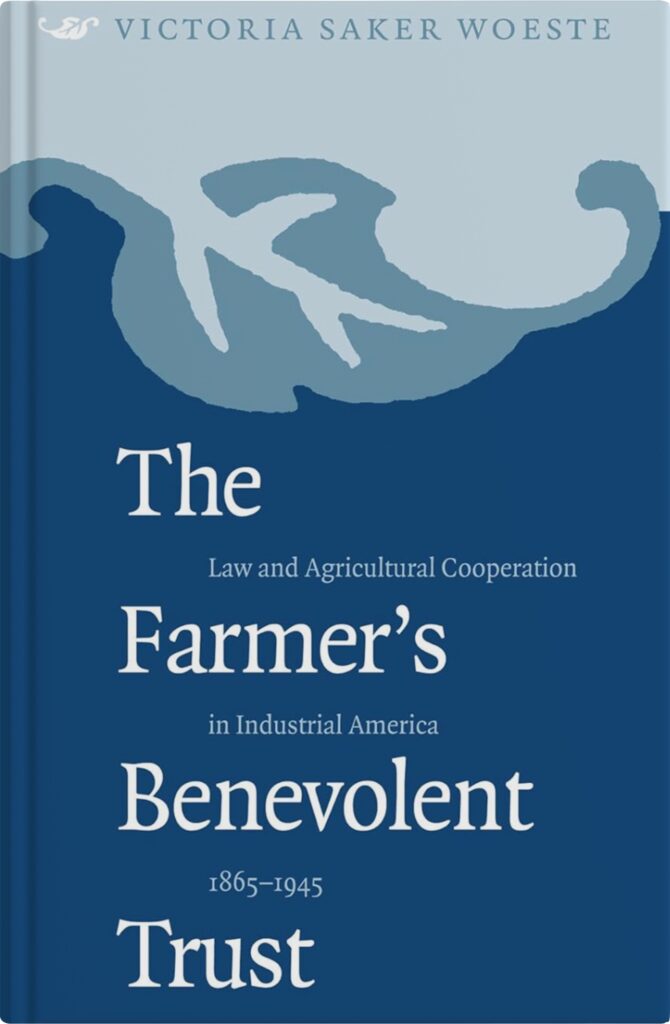
The Farmer’s Benevolent Trust Law and Agricultural Cooperation in Industrial America 1865-1945
Awards:
- 2000 J. Willard Hurst Prize, Law & Society Association
- A 1999ChoiceOutstanding Academic Title
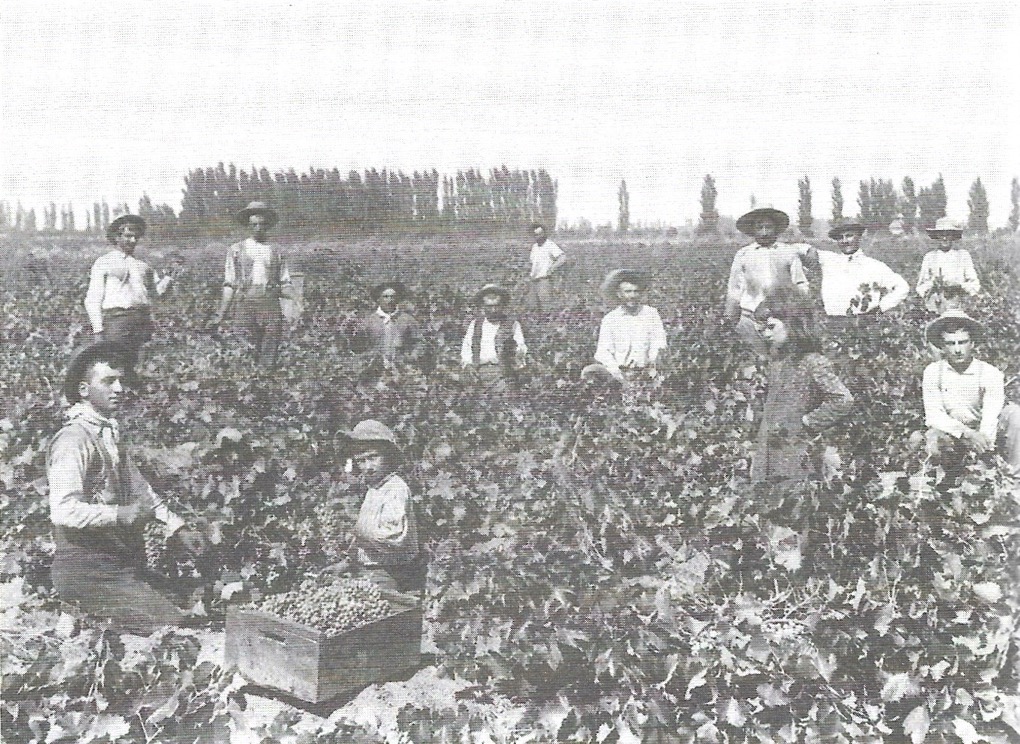
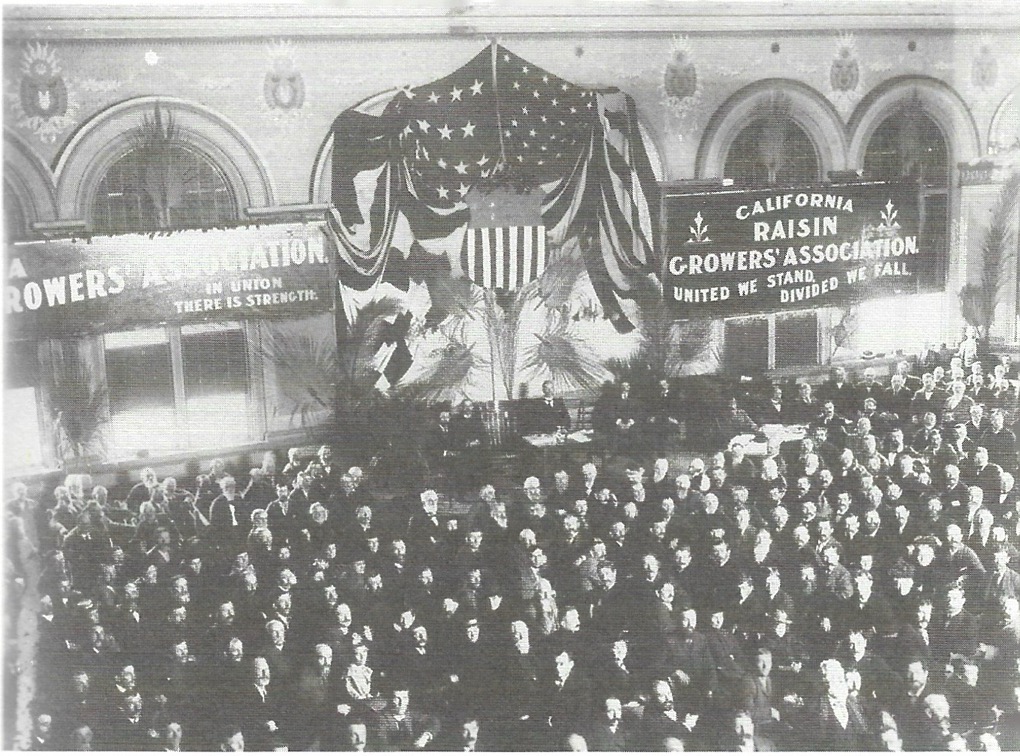
Americans have always regarded farming as a special calling, one imbued with the Jeffersonian values of individualism and self-sufficiency. As Victoria Saker Woeste demonstrates, farming’s cultural image continued to shape Americans’ expectations of rural society long after industrialization radically transformed the business of agriculture. Even as farmers enthusiastically embraced cooperative marketing to create unprecedented industry-wide monopolies and control prices, they claimed they were simply preserving their traditional place in society. In fact, the new legal form of cooperation far outpaced judicial and legislative developments at both the state and federal levels, resulting in a legal and political struggle to redefine the place of agriculture in the industrial market.
Woeste shows that farmers were adept at both borrowing such legal forms as the corporate trust for their own purposes and obtaining legislative recognition of the new cooperative style.In the process, however, the first rule of capitalism—every person for him-or herself—trumped the traditional principle of cooperation. After 1922, state and federal law wholly endorsed cooperation’s new form. Indeed, says Woeste, because of its corporate roots, this model of cooperation fit so neatly with the regulatory paradigms of the first half of the twentieth century that it became an essential policy of the modern administrative state.

Reviews of The Farmer’s Benevolent Trust
David Hamilton
“This is a well-researched, well-argued book. It is particularly good at telling the story of Sun-Maid and its larger connection to anti-trust and cooperative marketing law. It also challenges the view of California agriculture as dominated by agribusiness or ‘factories in the field.’ Woeste persuasively argues that the number of small-scale fruit growers actually increased…
David Hamilton
University of Kentucky
Jon Lauck
“Woeste’s book is a critical contribution to the history of modern American political economy, which is too often dominated by histories of big business, labor, and the state, with little attention to law and practically no attention to the economic development of agriculture. The book will make a mighty contribution to our understanding of the…
Jon Lauck
University of South Dakota
Paul Rhode
“It is refreshing to see careful new scholarship such as Victoria Saker Woeste’s Farmer’s Benevolent Trust, which focuses on the evolution of cooperative marketing arrangements in the Fresno raisin industry over the late nineteenth and early twentieth centuries. Unlike the standard broad-brush approach, Woeste concentrates on a single crop, produced in a relatively small geographic area,…
Paul Rhode
University of North Carolina
Thomas J. Davis
“Victoria Saker Woeste deftly details Sun-Maid’s origins and career drawing on participants’ papers, agricultural periodicals, and records of the U.S. Departments of Justice and Agriculture. . . . The result stands virtually alone at an intersection of economics, law, and society, as it positions the cooperative movement at the confluence of antitrust, corporation, and equal…
Thomas J. Davis
Arizona State University
Catherine McNichol Stock
“Woeste’s book unsettles even the most sophisticated reader’s sentimental notions about traditional nineteenth-century farm cooperatives. She makes an important contribution to understanding the transformations of agriculture in the twentieth century, through an articulate, detailed, multi-disciplinary analysis of legal and social history.”
Catherine McNichol Stock
Connecticut College
Philip Nelson
“The Farmer’s Benevolent Trust provides a multifaceted, richly nuanced, interdisciplinary view of the formative period of American agricultural cooperatives; a fascinating look at the interaction of agriculture, law, and the modern state; and a story of one way farmers came to terms with industrialization.”
Philip Nelson
University of Northern Iowa
Patrick Mooney
“The Farmer’s Benevolent Trust . . . . is an outstanding piece of historical scholarship. The strength and detail of Woeste’s analysis could serve as an excellent base for examining parallel developments elsewhere, providing insight into the nature of the capitalist state’s capacities to manage this particular form of class struggle. This book is must…
Patrick Mooney
University of Kentucky